Shopify vs BigCommerce: A Comparison for Growing Brands
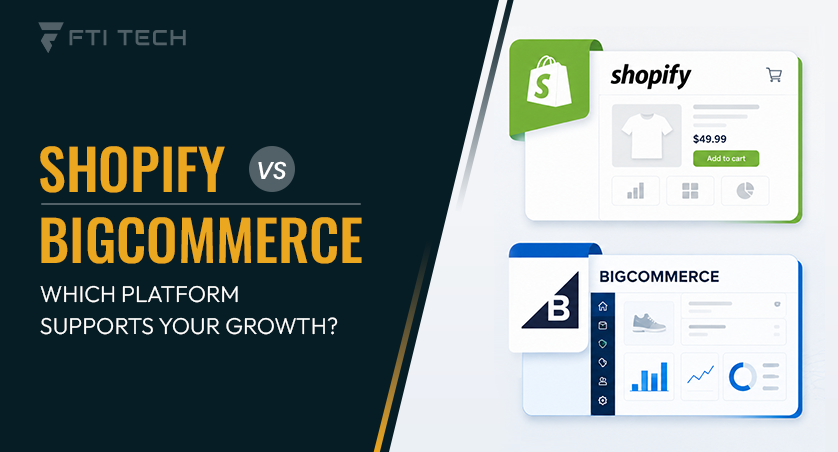
Shopify is better for brands that want to launch fast and keep operations simple. BigCommerce is the stronger fit when your business already carries complexity — B2B pricing, large catalogs, or multiple storefronts. Both platforms support serious eCommerce businesses, but they take opposite approaches. Shopify reduces friction, and BigCommerce adds structure. That difference matters once your store moves beyond its first wave of orders.
This guide covers exactly where those differences show up – in pricing, features, SEO, B2B capability, and long-term scalability. You can pick the platform that fits your current stage without creating drag at the next one.
What is Shopify?
Shopify is a hosted eCommerce platform built for speed. Founded in 2006, it serves over 4.8 million merchants globally across 175+ countries. Shopify handles hosting, checkout, payment processing, inventory, and themes in one package. You do not need a developer to launch.
It’s not a starter platform that you grow out of, though people sometimes assume that. Plenty of popular brands run on it. The reason is simple: Shopify keeps adding capability without piling on complexity.
The app ecosystem is massive. Payment tools work out of the box. Themes are flexible enough to look custom. You can expand into DTC, social, retail, and marketplaces without rebuilding anything.
Best Suited For
- Emerging brands
- DTC businesses
- Multi-channel sellers
- Businesses prioritizing ease of use
Shopify Advantages
- Easy store setup
- Large app marketplace
- Strong omnichannel selling capabilities
- Extensive theme ecosystem
- Scalable hosted infrastructure
Shopify Limitations
- Advanced features often depend on apps
- Recurring app costs can raise the total monthly spend
- Some native customization options are limited
- Transaction fees may apply with certain payment setups
- Some advanced features sit behind higher-tier plans
Shopify reduces friction and that’s its strength. The trade-off is that many sophisticated workflows are built by adding apps, integrations, or plan upgrades for fast-moving brands, which can be a fair exchange. For more complex businesses, however, the additional costs require closer budgeting.
To avoid over-reliance on apps, businesses often work with Shopify development experts to build tailored solutions directly into their store.
What is BigCommerce?
BigCommerce is a hosted eCommerce platform built for operational depth. Originally founded in 2009, it now positions itself as an Open SaaS platform for mid-market and enterprise commerce, with native B2B functionality and multi-storefront support as its core differentiators.
Where Shopify strips things away, BigCommerce builds them in. Complex product catalogs, B2B buyer pricing, multiple storefronts off one backend – these are native capabilities. The setup is heavier upfront. That weight becomes stability once operations grow genuinely complex.
Best Suited For
- Growing mid-market brands
- B2B businesses
- Large product catalogs
- Businesses seeking fewer third-party dependencies
BigCommerce Advantages
- More built-in ecommerce features
- No traditional platform transaction fees on standard payment setups
- Strong B2B capabilities
- Flexible product management
- Advanced customization opportunities
BigCommerce Limitations
- Steeper learning curve
- Smaller app ecosystem
- Fewer design options than Shopify
- More setup effort before launch
- Less beginner-friendly
Custom BigCommerce development services gives brands more structure from the start. That is valuable when operations are already complicated.
Shopify vs BigCommerce: Quick Comparison
Choosing between Shopify and BigCommerce comes down to where your business is right now and where it’s headed. This table breaks down the key differences so you can make that call faster.
| Area | Shopify | BigCommerce |
|---|---|---|
| Who it’s really for | Fast-moving DTC brands and early-stage businesses | B2B sellers, large catalogs, and multi-storefront operations |
| Launch speed | Live in days, no technical help needed | Slower to launch due to more upfront configuration |
| Cost over time | Lower entry cost, but third-party apps stack up quickly | More included out of the box, easier to predict recurring costs |
| Built-in features | Relies heavily on apps for advanced functionality | Most advanced features come built into the platform |
| B2B support | Possible via apps or higher-tier plans | Native B2B pricing, customer groups, and catalog tools |
| Multi-storefront | Not native, usually requires workarounds | Built-in and manageable from one dashboard |
| SEO control | Solid basics, but URL structure is opinionated | Full control over URLs, metadata, and category architecture |
| App ecosystem | 8,000+ apps, widest selection available | Smaller but covers most mid-market and enterprise use cases |
| Design flexibility | Wide theme selection, strong front-end customization | Fewer themes, more functional than design-focused |
| Day-to-day use | Easier for non-technical teams | Needs more platform familiarity, especially early on |
Shopify vs BigCommerce: Built-in Features and Customization Options
Here are some of the key differences you need to know about Shopify and BigCommerce.
-
Pricing
Shopify’s base plan looks affordable until the app layer kicks in. Reviews, loyalty, B2B pricing, automation, advanced reporting — each adds a separate subscription that stacks fast.
BigCommerce includes most of that natively. Customer groups, multi-storefront, B2B pricing, and catalog management come packaged in, making costs easier to forecast as you grow.
Expert’s take: For early-stage brands, Shopify. Once you’re scaling and the app costs pile up, BigCommerce is the smarter long-term spend. -
Features and Flexibility
Shopify’s ecosystem covers almost any requirement, and Shopify Magic handles automated tagging, brand voice tools and generative copy. But the catch is, a feature-heavy store means managing multiple subscriptions and keeping integrations from clashing.
BigCommerce bakes more in. B2B tools, customer group pricing, multi-storefront, and Catalyst headless storefronts are all native.
Expert’s take: BigCommerce wins here. You get more out of the box without stitching together a third-party stack. -
Ease Of Use and Setup
Shopify is faster to launch and easier for non-technical teams. Marketers and merchandisers can navigate it without much onboarding.
BigCommerce takes longer to configure upfront in needs more decisions and options before you go live.
Expert’s take: Shopify, hands down. If your team isn’t technical, BigCommerce will slow you down more than it helps early on. -
SEO and Organic Traffic Potential
Shopify handles the basics well; it includes sitemaps, editable metadata, blog functionality, and structured data support. The one real limitation is URL structure, which is fixed and opinionated.
BigCommerce gives you full URL control, stronger metadata options, and a catalog architecture that holds up better at scale for large SKU counts or content-heavy strategies. These fundamentals are easier to maintain when supported by scalable web development services that keep the site fast and structurally sound as it grows.
Expert’s take: For most stores, Shopify is enough. If you’re running a large catalog or going heavy on organic, BigCommerce gives you the control you’ll eventually need. -
Scaling Your Business on Each Platform
Shopify scales by removing obstacles. Managed infrastructure and native sales channel integrations let you expand into DTC, social commerce, and marketplaces without a large technical team.
BigCommerce scales by adding structure. B2B workflows, customer-specific pricing, and multi-storefront management are inside the platform; so the foundation holds as operational demands grow.
Expert’s take: BigCommerce. It’s built for complexity from the start — Shopify gets you there fast, but BigCommerce keeps up when operations get serious. -
Apps and Integrations
Shopify has the largest app marketplace in ecommerce. Most vendors with CRMs, ERPs, fulfillment, subscriptions, and loyalty, build for Shopify first because of the merchant volume.
BigCommerce covers the core categories well with, ERP, CRM, payments, marketplaces, shipping, and automation. Smaller ecosystem, but rarely a dealbreaker for mid-market brands with a defined tech stack.
Expert’s take: Shopify. The ecosystem isn’t close, and for most growing brands, that breadth matters more than BigCommerce’s native depth.
Which Platform Should You Choose?
Shopify is the cleaner fit when your priority is speed. Launch fast, test fast, rely on third-party tools, and keep daily operations simple.
Choose Shopify if:
- You want the fastest path to launch
- Your team prefers a simpler daily experience
- You rely heavily on third-party apps
- Design flexibility is a priority
BigCommerce fits better when the business is already carrying operational complexity. More built-in functionality, stronger B2B support, fewer recurring app subscriptions, and greater control over catalog and back-end commerce logic.
Choose BigCommerce if you:
- Need advanced built-in functionality
- Operate a B2B or hybrid business
- Want to reduce recurring app costs
- Require greater back-end control
If you want help deciding which fits your stage, FTI Tech’s development team works with growing brands on both platforms.
Final Thoughts
Platform choice looks like a technology decision. But its a cost structure decision. Shopify charges you through app subscriptions and, on some plans, transaction fees. BigCommerce charges you through setup time, configuration, and now for merchants outside its approved gateway list. Make the decision based on your current operational stage, and revisit it whenever your business model changes significantly.
If you are still weighing both options or want a second opinion before committing, we are happy to help. Reach out to us with your current setup and revenue stage, and we will tell you which platform makes more sense for where you are headed.
Shopify vs BigCommerce: Common Questions Answered
Is Shopify or BigCommerce Better for Scaling an eCommerce Business?
Depends on what scaling looks like for you. Shopify is the faster path — better omnichannel, solid POS, and an app ecosystem that covers most gaps. But if scaling means B2B pricing tiers, multi-brand setups, or multi-currency operations, BigCommerce handles that natively without stitching apps together.
Which Platform Offers Better SEO Capabilities?
BigCommerce has the stronger technical foundation — full URL control, granular metadata handling, and better catalog architecture for large SKU counts. Shopify closes the gap with faster page speeds and a wider range of SEO apps. For most stores, Shopify is enough. For content-heavy or large catalog operations, BigCommerce gives you more to work with.
Does BigCommerce Require Fewer Third-party Apps?
Yes. Features that cost extra on Shopify — B2B tools, complex promotions, customer groups, advanced product rules — come built into BigCommerce. A comparable Shopify store can easily run four to six paid apps on top of the base plan. That gap adds up faster than most brands expect.
Which Platform is More Cost-effective For Growing Brands?
Shopify is cheaper to start and has a lower total cost of ownership for most brands. BigCommerce saves money on third-party apps and charges no transaction fees on external payment gateways, but Shopify’s conversion rates and lower operating costs often offset that. Run your actual numbers before assuming BigCommerce is the leaner option.
Can Businesses Migrate From Shopify to BigCommerce or Vice Versa?
Yes, both directions are straightforward in terms of data — products, customers, orders, and SEO settings can be transferred via migration apps, third-party services, or manual CSV uploads. The part that needs real attention is SEO. A poorly handled migration can undo rankings you’ve spent years building and it triggers the bigger question of whether to rebuild or redesign the site entirely.